
Scientific Climate Ratings: From Exposure to Financial Impact – A New Standard in Climate Risk Ratings
Our Sovereign Climate Risk Ratings translate warming pathways into expected GDP losses, projected until 2050.
They help you capture the structural economic damage that sovereign spreads don't yet reflect.
The Sovereign Climate Risk Rating

Our Methodology
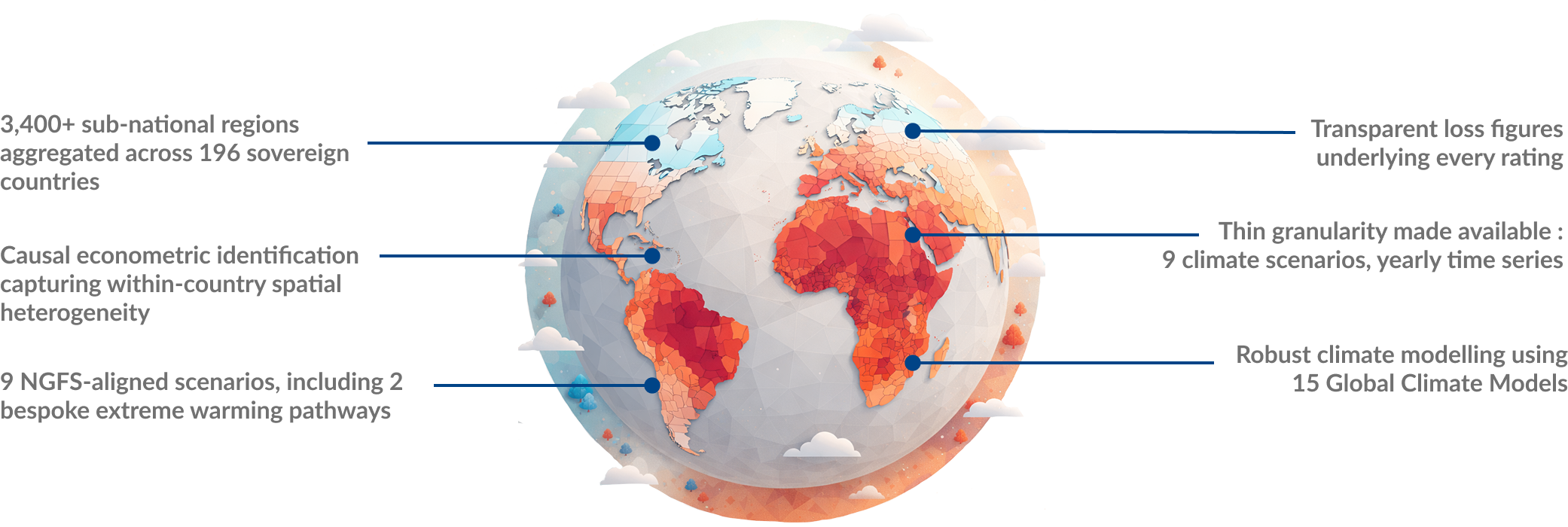
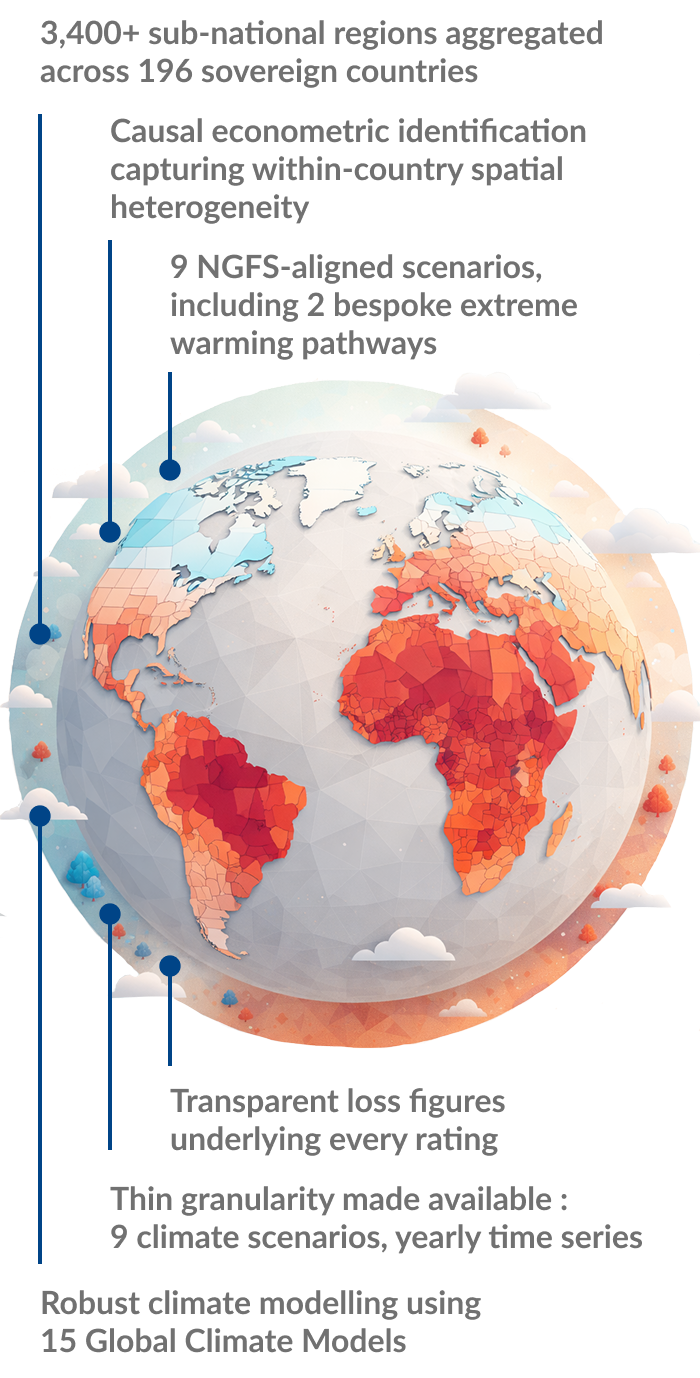
Underlying Key Inputs
NGFS scenarios pathways
Econometically estimated local damage functions
Population-density aggregation weights
What is my exposure to climate risks?
How do I rank versus peers?
- Economically interpretable prospective macroeconomic losses across 191 sovereigns
- Projections under 9 NGFS-aligned scenarios, up to 2060
- Yearly time series at sub-national level
- Ready to input into your own risk models
Methodology Documents
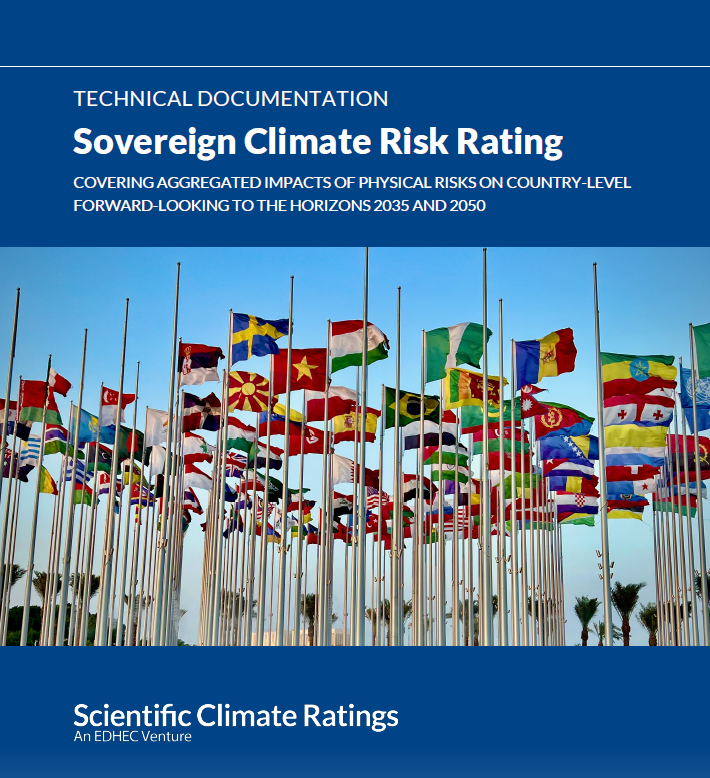
Sovereign Climate Risk Ratings methodology
Scenarios Extension
methodology
What does sovereign climate risk mean for you?
SOVEREIGN BOND INVESTOR
Sovereign spreads do not yet price in the long-run GDP losses that chronic climate warming is projected to cause. The Sovereign Climate Risk Rating gives you an economically interpretable, forward-looking measure, expressed as expected GDP per capita impact, that you can overlay directly on your existing credit views to identify where climate risk is structurally mispriced, and where it is already compensated.
RISK & PRUDENTIAL OFFICER
I need climate inputs for ICAAP / stress testing...
Supervisory frameworks, including ECB and PRA climate guidance, require institutions to integrate forward-looking climate scenarios into Internal Capital Adequacy Assessment Processes. The Sovereign Climate Risk Rating is built on the NGFS scenario framework, making it directly compatible with regulatory stress-testing requirements. It delivers quantified GDP impact pathways per sovereign, per scenario, at the 2035 and 2050 horizons your ICAAP demands.
COUNTRY RISK ANALYST / ECONOMIST
I assess country-level macro risk...
Traditional country risk models capture political, fiscal, and external vulnerability, but systematic GDP losses from climate warming are not yet embedded in standard sovereign assessment frameworks. The Sovereign Climate Risk Rating adds a structural, economically grounded climate layer: permanent GDP per capita damage trajectories derived from sub-national temperature data, aggregated to the sovereign level with full peer-group context.
Decoding Sovereign Risks : Find the Answers You Need (FAQ section)
Sovereign Climate Risks Rating Library
Please note the Sovereign Climate Risk Ratings for the following countries are still under review and approval process with the sovereign institutional entities in charge :
- Russia
Request a sample country report or schedule a methodology walkthrough with our team.
Also assessing infrastructure assets? Explore our Climate Exposure Rating for infrastructure →